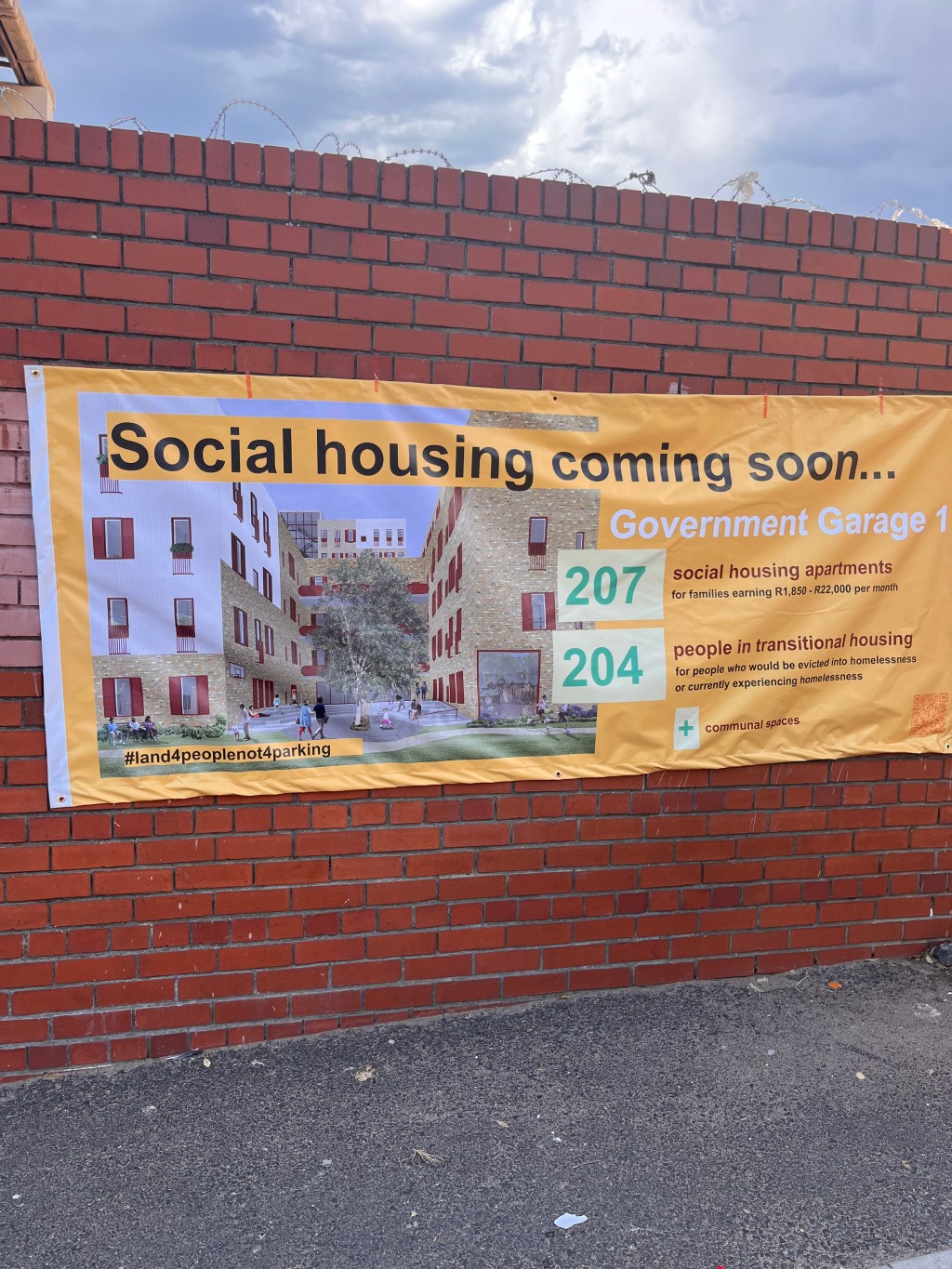
Last week, I was at the Urban Land Justice with a room full of stakeholders from all walks of life, talking about how land can be unlocked for people. Rarely have I been in a room where the discussion is so lively and views are explored from all angles; academia, government, private sector and most importantly, people who suffer from the effects of spatial apartheid till today.
Sitting there, I wondered what role digital government could have for unlocking affordable housing, an issue that has now become a global challenge for governments around the world. In fact, many people don’t realise that we are often 1 or 2 paychecks from being homeless, given the current affordability challenge that exists in cities.
The conversation got me thinking about Digital Public Infrastructure (DPI) – not in the abstract way we usually discuss it, but in the very real, practical sense of how it could actually help someone secure decent housing. You know, the kind of thinking that happens when you’re forced to confront the gap between policy papers and the person sleeping rough outside your office building.
The Finance Maze: When Your Digital Identity Could Be Your Key to a Home
Let us imagine Loca (not a real person), is a domestic worker who’s been saving for years to get a small place for her family. But here’s the thing – she gets paid in cash, has no formal credit history, and when she walks into a bank, she becomes invisible. The traditional financial system doesn’t see her, despite her being one of the most financially disciplined people I know.
This is where DPI could be transformative, but not in the way most tech enthusiasts imagine. We’re not talking about fancy apps or blockchain solutions. We’re talking about basic digital identity systems that could help Loca prove she exists, that she has income, that she’s been paying rent consistently for five years.
Imagine if her digital identity could aggregate her rental payment history, her utility payments, even her taxi fare patterns to build a financial profile that actually reflects her creditworthiness. Suddenly, she becomes visible to formal finance mechanisms. Government housing subsidies could be targeted more effectively, and even private lenders might be willing to take a chance on someone whose financial behaviour they can actually see and understand.
But here’s the catch – and this is where I get worried about our over-reliance on technological solutions. Building these systems requires us to think deeply about who gets to be “seen” and who remains invisible. The same biases that exist in our current financial systems could easily be embedded into digital ones, just with more efficiency and less accountability.
Urban Planning: When Data Meets the Politics of Space
The urban and land policy conversation is where DPI gets really interesting, and frankly, really messy. At that Urban Land Justice event, one aspect was clear – spatial planning still reflects apartheid geography. People live far from economic opportunities.
DPI could help us map these patterns in real-time. We could have integrated land information systems that show exactly where suitable land exists, what infrastructure is needed, and how transport networks could be optimized to connect people to opportunities. In theory, this could support more evidence-based urban planning decisions.
But theory and practice are different animals entirely. I’ve seen too many “smart city” initiatives that produce beautiful dashboards while ignoring the political economy of land. Who owns the land? Who benefits from keeping certain areas underdeveloped? Which communities get consulted when “optimal” locations are identified?
DPI tools could make these power dynamics more transparent – imagine public databases showing land ownership patterns, development applications, and community consultation processes. But they could also be used to further marginalize communities if we’re not careful about how these systems are designed and governed.
Institutional Frameworks: The Coordination Challenge
This brings us to institutional frameworks, which is probably where DPI could have the most immediate impact. Right now, if you want to develop affordable housing in South Africa, you need to navigate multiple government departments, each with their own systems, processes, and data requirements. It’s a bureaucratic nightmare that adds months or years to development timelines, costs that ultimately get passed on to end users.
Integrated government systems could streamline these processes significantly. One application, one system, with data flowing between departments automatically. Planning approvals, environmental assessments, infrastructure planning, and subsidy applications could be coordinated instead of happening in parallel universes.
I’ve seen glimpses of this working. Estonia’s e-government system, for example, allows developers to submit all required documentation through a single portal. What takes months in many countries happens in weeks there.
But again, technology is only as good as the institutions using it. If your planning department is understaffed and overwhelmed, giving them a better computer system won’t magically create more capacity. If corruption is a problem in permit approvals, digital systems might just create new opportunities for rent-seeking behavior.
The real value of DPI in institutional frameworks isn’t just efficiency – it’s transparency and accountability. When processes are digitized and data is accessible, it becomes much harder to hide delays, favoritism, or outright corruption.
The Construction Supply Chain: Where Digital Meets Physical Reality
Finally, let’s talk about the construction supply chain, particularly for social housing. This is where the rubber meets the road – literally. You can have the best financing, the most progressive policies, and the most efficient institutions, but if you can’t actually build houses affordably, none of it matters.
DPI could revolutionize how we approach social housing construction. Digital procurement systems could connect small-scale contractors with government projects, breaking up the cartels that often dominate public construction. Blockchain-based supply chain tracking could ensure materials meet quality standards while preventing inflated pricing.
More interesting to me is the potential for digital platforms to coordinate community-led construction. Imagine systems that help communities pool resources, share technical expertise, and coordinate volunteer labor for housing projects. The informal construction sector, which builds most housing in places like South Africa anyway, could be supported rather than ignored.
But we need to be realistic about constraints. The construction industry is notoriously traditional and relationship-based. Digital systems need to work with existing networks and practices, not try to replace them entirely.
The Bigger Picture: Technology as Tool, Not Solution
Sitting in that room last week, listening to people share their lived experiences of housing exclusion, I was reminded of something fundamental: technology is a tool, not a solution. DPI can make processes more efficient, transparent, and inclusive, but it can’t solve the political economy of housing.
The real barriers to affordable housing aren’t primarily technological – they are political. They are about who gets to live where, who benefits from scarcity, and who has the power to change the rules. DPI can support efforts to address these issues, but it can’t replace the hard work of organizing, advocacy, and political change.
That said, when used thoughtfully and with genuine community participation, DPI could be a powerful ally in the fight for housing justice. The key is remembering that the goal isn’t digital transformation for its own sake – it’s homes for people who need them.
And maybe, just maybe, that’s a vision of technology I can get behind.


 Aliasgher Janmohammed