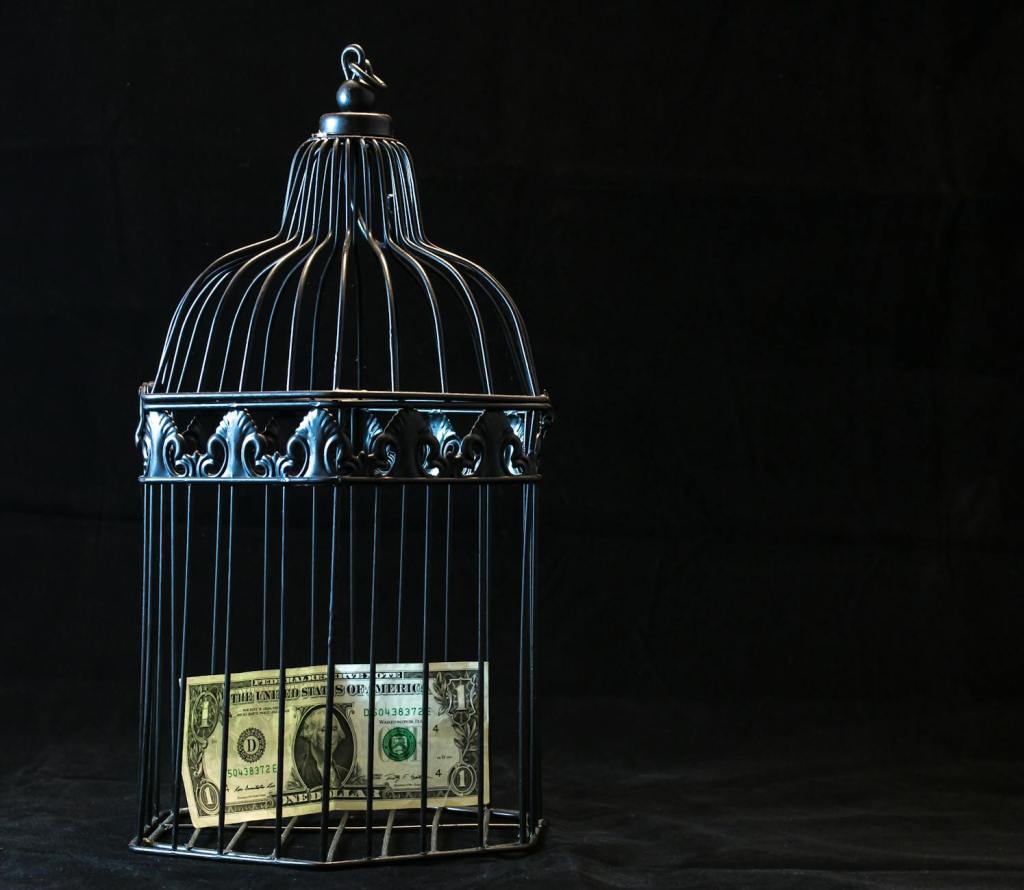
Evgeny Morozov puts it perfectly in a recent Doha Debate panel where he says, and I paraphrase, that Capitalism only sees us in 2 to 3 identities – a consumer, an entrepreneur or a wage worker. My other identities as a parent, or as a neighbour, or as a friend, are all but non-existent because it doesn’t add to the plus or minus of the economy. My favourite economist, Ha Joon Chang, gave an example in his book titled Edible Economics that two caregivers (mostly women) would be seen as “contributing” to the economy if they essentially paid each other money to take care of each other’s children. BUT, currently, they aren’t seen as producing anything positive because they do the task of taking care of children for free.

That, in a nutshell, is the challenge that we are seeing with neocapitalism. A world order that has been adopted by all parties regardless of where they lean, as it doctrine of creating conditions that made it “easier” to do free trade and grow the economy. The evidence is palpable, though, since it has increased inequality, left young people with pennies to build a life, created homelessness and driven conditions that are absolutely unsustainable. Today, a small percentage of the world’s richest people, such as the 26 richest individuals in 2018, hold as much wealth as the 3.8 billion poorest people combined. Statistics like this should send chills down our spines, but have become the norm.
The rise of Mamdani in New York, as well as a wave of youth protests in Bangladesh, Vietnam, Morocco, Madagascar, and Tanzania, shows that Gen Z and the younger generation are exhausted of the neoliberal policies that have left them with governments and policies that aren’t working for them.
Capitalism as a system is unsustainable and, without sounding like a revolutionary, the World will see a new system in my lifetime that is linked to its citizens and residents, rather than the few political elite. The interesting question for me is what that new system will be

 Aliasgher Janmohammed