Lines. Long lines.
I still remember my first visit to the Department of Home Affairs in South Africa to apply for my first ID book. While many of the details have blurred over time, one experience remains vividly clear: the queue. It was agonisingly slow. I moved forward one seat at a time, inching closer to the counter at a snail’s pace, losing hours in the process.
As I waited, I could already think of at least three more efficient ways the service could have worked. I could submit my application online and come in only to verify it. There could be an online booking system so I would be helped at a specific time rather than spending the entire day waiting. In fairness, the Department of Home Affairs has come a long way since then and has implemented many of these changes. But the question still lingers: why are services that could be efficient from the start designed with so much sludge?
The concept of sludge, while coined in a North American context, applies to governments around the world. Sludge refers to unnecessary barriers that make it harder for citizens and residents to access services they are entitled to. While inefficiency is not unique to government, it disproportionately shows up in public services, where systems move slower to change for both good and bad reasons. Whether it is applying for an ID, renewing a driving licence, or reporting potholes, sludge in government services creates frustration and fatigue for residents. Ask almost anyone in South Africa, or in most countries for that matter, and they will have a story about a government service that took far too long. These delays come with real costs. Many service applications take an entire day, disproportionately affecting people who earn hourly or daily wages and deepening existing inequalities.
The most effective way to reduce sludge in government services is to design with users in mind. Too often, services fail because they are not designed end to end. Each step adds friction, and the burden of navigating the system is pushed onto the user.
I experienced the opposite recently while renewing my motor vehicle licence in Cape Town. Because I live in the city, I was able to make a booking online. On the day, I arrived at the traffic centre, filled in a form, and was ushered straight to the counter because I had pre booked. The city effectively told me that my time mattered and that the effort I made to plan ahead would be rewarded. The experience did more than meet my expectations. It exceeded them.
As Sarah Drummond points out, services tend to fail when expectations do not match the experience, when users are forced to become experts in systems they have never used before, and when customers are expected to solve their own problems. I would add that services also fail when they impose additional financial or time costs on users simply to make the system work.
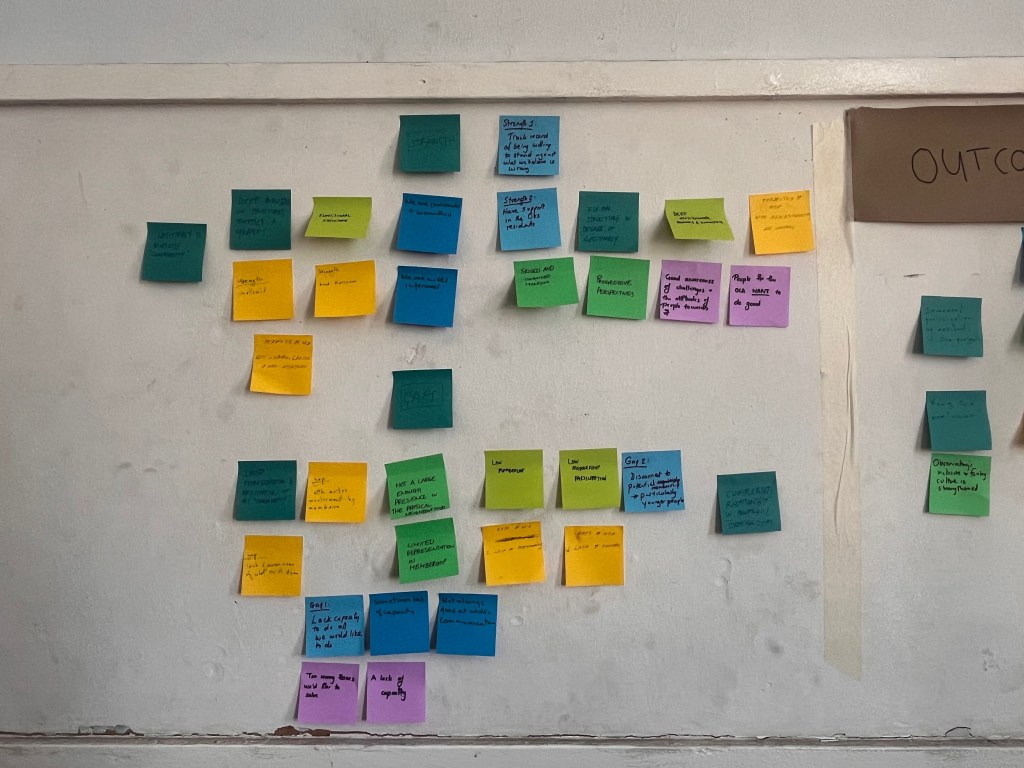
Government can further improve public service design by embracing failure more openly. The way public systems are structured has made governments overly cautious about failing, largely due to public scrutiny and voter backlash. The assumption is that more planning upfront will prevent failure altogether. In reality, failure is inevitable. Even with extensive planning, systems still break, just as we do in everyday life. The goal should be to fail conservatively, learn quickly, and adapt before small issues become irreversible ones.
A colleague of mine, Paul Figueira, who leads user engagement and design work at Open Cities Lab, often highlights that local governments are mandated to engage with their constituents, and many do. Yet there is frequently a disconnect between what beneficiaries ask for and what decision makers ultimately deliver. As the local government white paper review notes, government has historically designed for people rather than designed with them.
If users and beneficiaries are meaningfully engaged throughout service design, governments have a real opportunity to reduce inequality embedded in their processes. More importantly, they can reduce the sludge that places unnecessary burdens on the very people public services are meant to serve


 Aliasgher Janmohammed